$ 65.00
$ 75.00
100 Gram Jar
Vitiligo is a skin condition that affects millions of people around the world. It causes patches of skin to lose their natural pigment, resulting in white or lighter areas on the body. While vitiligo is not physically dangerous, it can significantly impact a person’s appearance and emotional well-being.
For individuals with extensive vitiligo, achieving a uniform skin tone can be challenging. Many treatments aim to restore pigment, but these methods do not always produce consistent results. In such cases, dermatologists may recommend depigmentation therapy using Monobenzone cream.
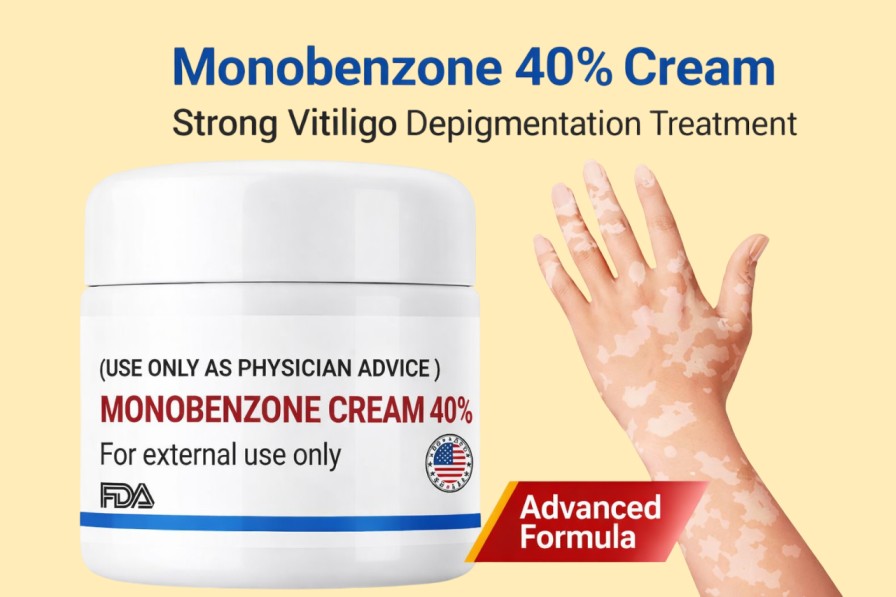
Monobenzone 40% Cream is a stronger depigmenting formulation designed to help remove remaining pigmentation in normal skin, allowing patients with widespread vitiligo to achieve a more uniform appearance. This treatment option has been used in dermatology for many years and is recognized for its effectiveness in managing extensive vitiligo cases.
This guide explains everything you need to know about Monobenzone 40% Cream, including how it works, benefits, proper usage, safety considerations, and who may benefit from this treatment.
Monobenzone 40% Cream is a topical depigmenting medication used primarily in the treatment of extensive vitiligo. It contains Monobenzyl Ether of Hydroquinone, a compound known for its ability to permanently reduce melanin production in the skin.
Unlike treatments that attempt to restore lost pigment, Monobenzone works by removing the remaining pigment from unaffected skin, helping create an even skin tone across the body.
This approach is particularly useful for individuals whose vitiligo has already spread across large areas of the skin.
High-strength depigmentation formula
Designed for extensive vitiligo cases
Helps achieve uniform skin tone
Used under dermatological supervision
Produces gradual depigmentation over time
Because of its strong depigmenting properties, Monobenzone 40% Cream is typically recommended only when other treatments have not produced satisfactory results.
Vitiligo is a pigmentation disorder that occurs when melanocytes, the cells responsible for producing melanin, stop functioning or are destroyed.
Melanin is the pigment that determines the color of our skin, hair, and eyes. When melanocytes are lost, patches of skin lose their color and become white.
Vitiligo can develop at any age and may affect different areas of the body.
Face and neck
Hands and fingers
Arms and elbows
Feet and knees
Around the eyes and mouth
The condition may remain stable for years or gradually spread over time.
Although the exact cause of vitiligo is still being researched, several factors are believed to contribute to the condition.
Many scientists believe vitiligo is an autoimmune disorder in which the immune system mistakenly attacks melanocytes.
Vitiligo can run in families, suggesting that genetic predisposition may play a role.
Oxidative stress caused by an imbalance of free radicals may damage pigment-producing cells.
Certain environmental factors may trigger or worsen vitiligo, including:
Severe sunburn
Skin trauma
Chemical exposure
Emotional stress
Understanding these triggers can help individuals manage their condition more effectively.
Monobenzone works by targeting melanocytes and disrupting melanin production.
The cream penetrates the outer layers of the skin.
It interacts with melanocytes responsible for producing pigment.
The compound triggers an immune response that gradually reduces melanin production.
Pigmented skin begins to lighten.
Over time, the treated areas match the existing depigmented patches.
This process leads to permanent depigmentation of treated skin areas.
Because the results are long-lasting, Monobenzone treatment should be considered carefully and used only under medical guidance.
Monobenzone 40% Cream offers several advantages for individuals with widespread vitiligo.
The primary goal of depigmentation therapy is to reduce contrast between pigmented and depigmented areas, creating a more even skin tone.
Unlike many treatments that provide temporary improvement, Monobenzone typically produces permanent depigmentation.
Monobenzone has been used in dermatology for decades as a depigmentation therapy for severe vitiligo.
Many individuals with extensive vitiligo report improved confidence and comfort after achieving a consistent skin tone.
Proper usage is essential to achieve the best results while minimizing potential side effects.
Wash the affected area gently with mild soap.
Pat the skin dry before applying the cream.
Apply a thin layer of Monobenzone cream to pigmented areas.
Use once or twice daily as directed by a healthcare professional.
Wash hands after application.
It is important to avoid applying the cream to areas that are already fully depigmented.
Depigmentation with Monobenzone develops gradually over time.
First 4–8 Weeks
Early lightening of treated areas may begin.
3–6 Months
More noticeable depigmentation occurs.
6–12 Months
Skin tone gradually becomes more uniform.
Individual results may vary depending on skin type and the extent of vitiligo.
Like any topical treatment, Monobenzone may cause some side effects, especially during the initial stages of use.
Skin redness
Mild irritation
Dryness
Burning sensation
Allergic contact dermatitis
Uneven depigmentation if used incorrectly
If severe irritation occurs, treatment should be paused and medical advice should be sought.
Before starting Monobenzone therapy, consider the following precautions:
Use only under the supervision of a dermatologist.
Avoid contact with the eyes and mucous membranes.
Do not apply on broken or inflamed skin.
Use sunscreen daily to protect depigmented skin.
Avoid prolonged sun exposure.
Depigmented skin is more sensitive to sunlight, making sun protection essential.
Monobenzone therapy is generally recommended for individuals who:
Have extensive vitiligo affecting large areas of the body
Have not responded well to repigmentation treatments
Want to achieve a consistent skin tone
Understand that depigmentation is permanent
This treatment is usually not recommended for individuals with small or localized vitiligo patches.
Different treatments are used depending on the stage and severity of vitiligo.
| Treatment | Purpose | Suitable For |
|---|---|---|
| Corticosteroid creams | Reduce inflammation | Early vitiligo |
| Phototherapy | Stimulate melanocytes | Moderate vitiligo |
| Skin grafting | Restore pigment surgically | Localized vitiligo |
| Monobenzone cream | Permanent depigmentation | Extensive vitiligo |
Monobenzone differs from other treatments because it removes remaining pigment rather than restoring it.
To achieve the best outcomes from Monobenzone therapy:
Follow the recommended application schedule.
Protect the skin from excessive sunlight.
Use sunscreen with high SPF daily.
Maintain regular follow-ups with a dermatologist.
Monitor skin reactions carefully.
Consistency is key when using depigmentation therapy.
Vitiligo can affect emotional well-being, particularly when visible areas of the body are involved.
Individuals with extensive vitiligo may experience:
Reduced self-confidence
Social anxiety
Emotional stress
Achieving a more uniform skin tone through depigmentation therapy may help improve overall quality of life for some individuals.
Vitiligo is a complex skin condition that affects millions of people worldwide. While many treatments aim to restore lost pigment, these approaches may not always be effective for individuals with widespread vitiligo.
Monobenzone 40% Cream offers an alternative solution by gradually depigmenting remaining pigmented skin, allowing patients to achieve a more uniform appearance.
When used under proper medical supervision, Monobenzone therapy can provide long-lasting cosmetic improvement for people with extensive vitiligo.
Anyone considering Monobenzone treatment should consult a qualified dermatologist to determine the most appropriate treatment approach based on their individual condition.
You need to login for writing a review. Login to your account

No Comments found !